

There is a distinction in essay writing that we don’t discuss nearly enough.
Some essays are read. Some are evaluated. But the best ones are experienced.
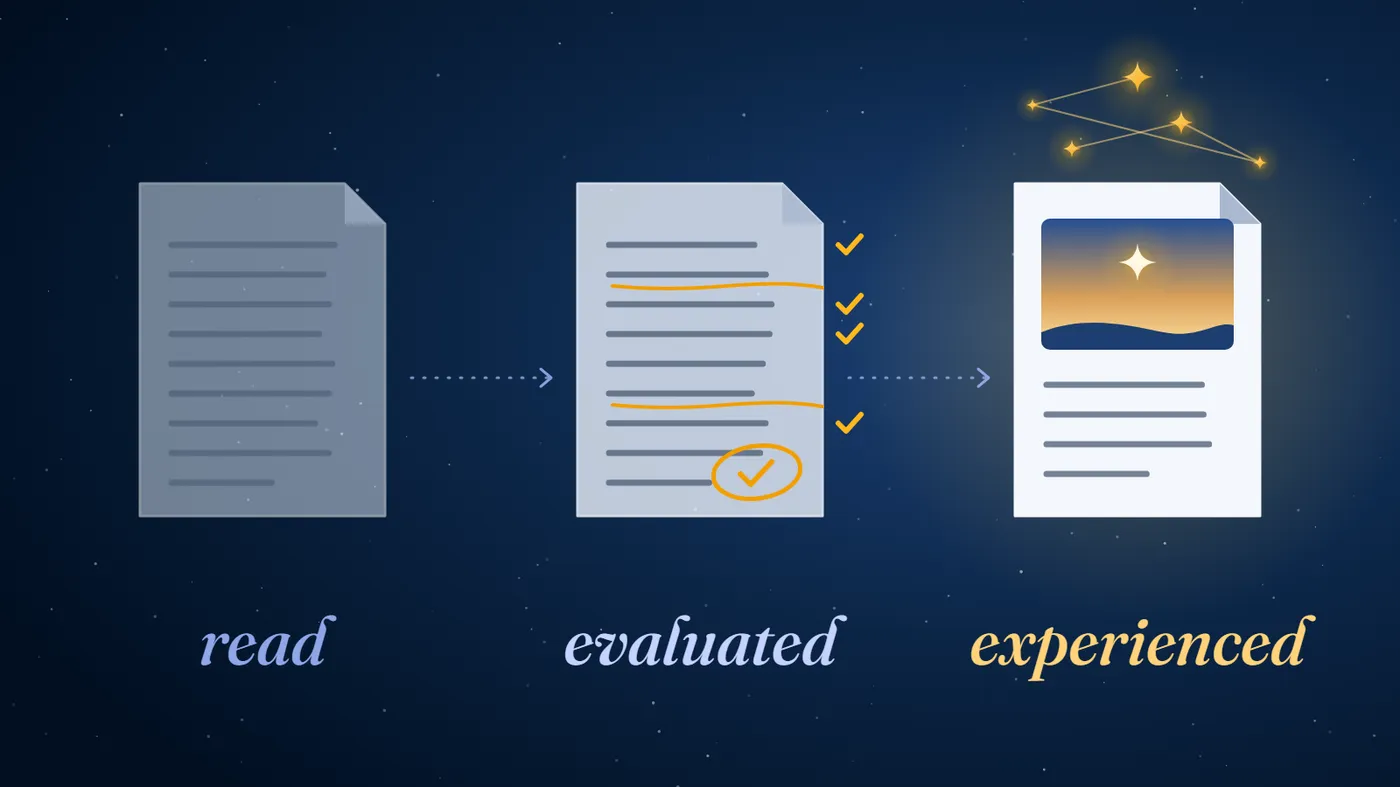
The first two types which are common, give an admissions reader information to read and evaluate. But the exceptional one invites the reader into someone’s world. It makes them pause, wonder, empathise, smile, reflect, or reconsider something they thought they already understood.
By creating an “experience,” you are unlocking the humanity behind your essay!
Framework Obsession
Somewhere along the way, essay writing became an exercise in engineering.
The hook. The narrative arc. The three-act structure. The opening anecdote. The conflict. The resolution. The reflection. And, of course, the endless frameworks!
Frameworks are useful when they help a writer organise their thoughts. But when they become the starting point, the destination and the entire writing philosophy, something goes fundamentally wrong.
An applicant begins asking: What should my introduction look like? Where should I insert the turning point? How do I demonstrate leadership? What is the ideal structure?
The more consequential question is often overlooked:
What is it about my experience that another human being should be allowed to experience through my words?
An essay can be technically flawless and emotionally vacant. It can have a compelling opening, perfectly arranged paragraphs and an impressive conclusion, yet reveal very little about the person behind it. Rather, that’s how it ends up being “impassive.”
What happens inside the reader’s brain?
This is where storytelling becomes particularly fascinating.
In her TED talk, How Your Brain Responds to Stories, leadership expert Karen Eber explains how stories engage the brain differently from the way isolated information does.
When we hear a story, we don’t merely process its words. We mentally simulate aspects of what is being described. A falling phone, the sound of footsteps in snow, or a moment of uncertainty. We begin to imagine the experience rather than simply receive and perceive the information.
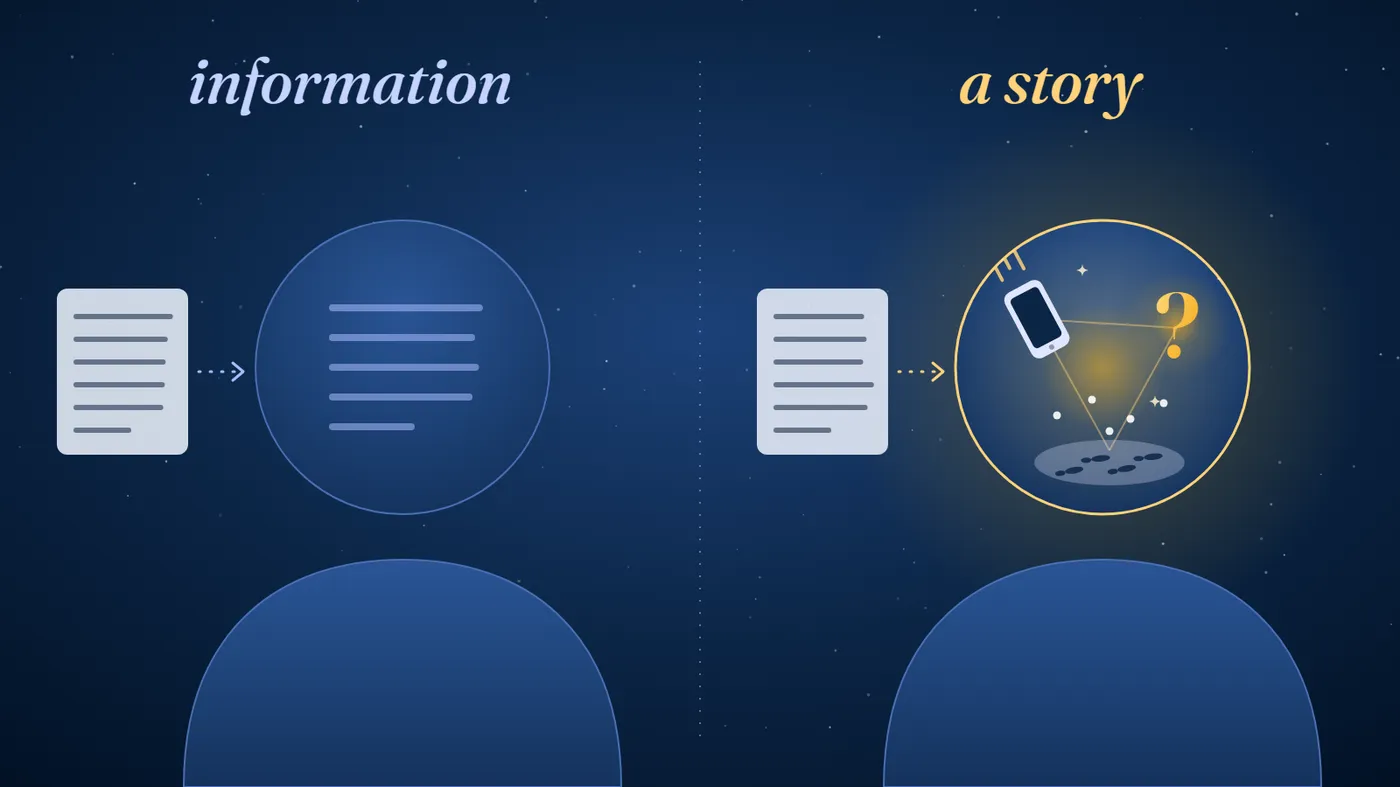
Eber discusses this through concepts such as neural coupling, emotional engagement and empathy.
In other words, a well told story can make the listener feel psychologically closer to an experience they have never personally lived.
There is research to support the broader argument, too. A 2021 meta analysis examining more than 75 samples and over 33,000 participants found that narrative texts were, on average, easier to understand and better remembered than expository texts.
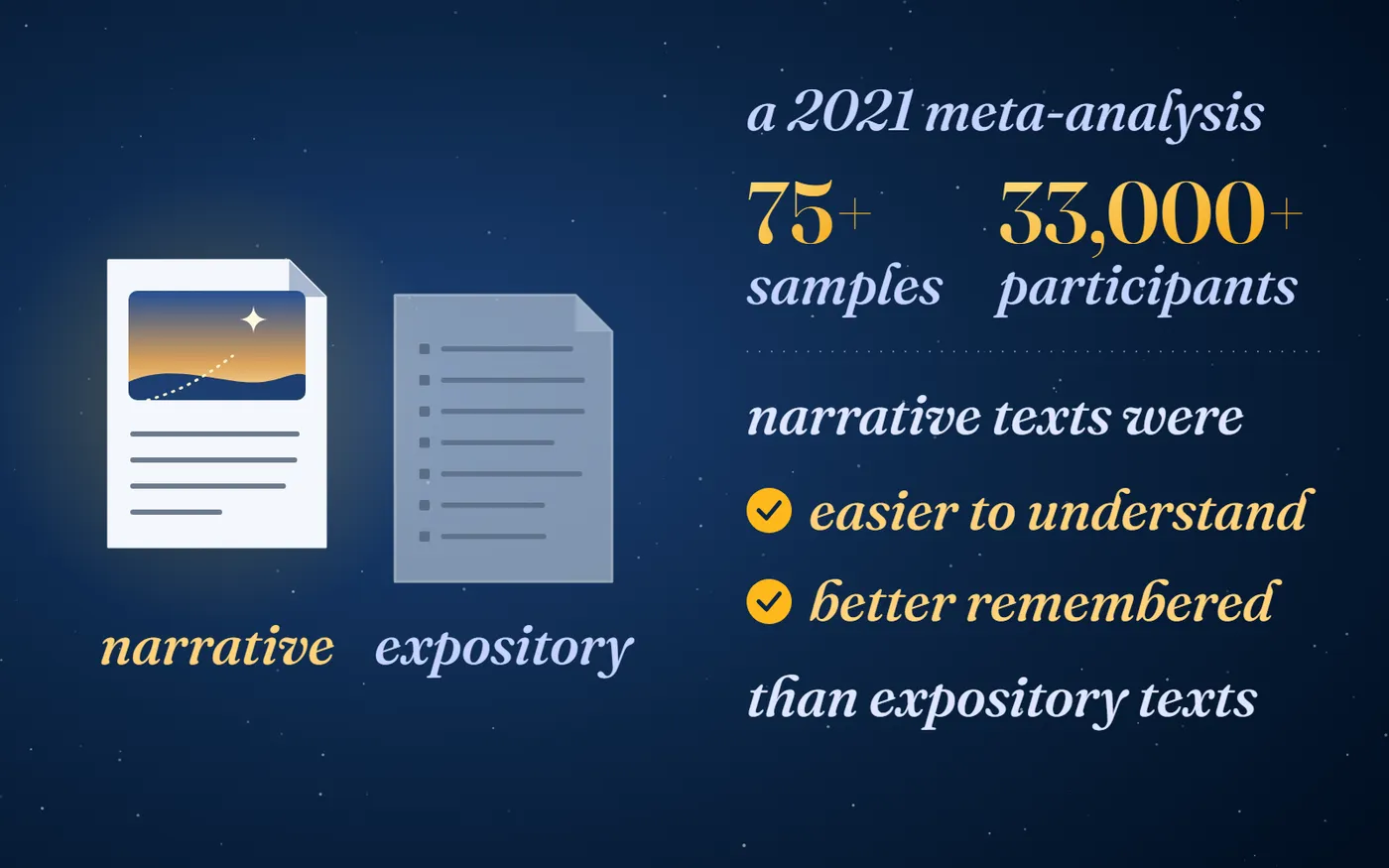
This does not mean every essay needs dramatic storytelling or elaborate sensory descriptions. It means that the way we communicate an experience can influence how deeply another person understands and remembers it.
And this distinction matters for a college applicant.
An essay is an encounter with another human being
Consider two applicants describing an intellectual challenge.
One writes about
- Identifying a problem
- Researching possible solutions
- Developing a technical intervention
- Achieving a measurable outcome
The other takes us into
- The moment the problem first became impossible to ignore
- What unsettled them to operate with a sense of intellectual urgency
- Why they cared
- What they tried
- Where they struggled
- What changed their thinking
- What the experience revealed about them
Both may have undertaken the same project. Both may have impressive outcomes.
But the second account gives the reader something more valuable than a list of accomplishments. It provides access to the mind and humanity of the person who accomplished them.
This is not an argument against facts, technical detail or achievement. It is an argument for giving those things meaning.
Your research project, entrepreneurial venture, community initiative, professional setback or personal challenge is not automatically your story. The story lies in your relationship with that experience.
Vulnerability is not weakness. It hatches human connection.
To understand the importance of vulnerability, we need to discern the evolution of authentic leadership. That is, moving away from the infallible “hero leader” towards leaders who demonstrate vulnerability, acknowledge shortcomings and practise empathy.
The same principle applies to essays.
You do not need to portray yourself as someone who always knew the answer, overcame every obstacle, or emerged victorious. Sometimes the most revealing part of an experience is the assumption you got wrong, the person you failed to understand, the uncertainty you struggled with or the uncomfortable truth you eventually accepted.
You do not need a tragedy. You do not need a cinematic transformation. You need honesty, perspective, and the willingness to examine your own experience.
A reader does not necessarily connect with your perfection. They connect with your humanity.
So, before you write your next essay...
Forget the framework for a moment. Forget what an admissions consultant might expect. Forget the pressure to sound impressive.
Ask yourself:
0 of 5
Start there. Let the story emerge. Bring structure in later, when it serves the story rather than dictates it.
And remember: an essay is not a performance in which you demonstrate how impressive you are. It is an opportunity to let another person understand what makes you truly “you.”
The greatest essays don’t merely tell readers what happened. They make readers feel why it mattered.
Don’t just write an essay that an admissions officer can “evaluate.” Write one that another human being can “experience.”
– Blue Bear Global | Big Dreams. Bigger World.
Frequently asked questions
What makes an admissions essay memorable?
Not how much it says, but whether the reader experiences something. An essay that lets the reader into your world, so they pause, wonder or see something differently, stays with them longer than a list of achievements.
Should I use a framework or a template for my essay?
Frameworks help you organise your thoughts, but they shouldn’t be where you start. Find the story first, by asking what really changed the way you think, and bring in structure later, when it serves the story.
Do I need a dramatic story for my essay to stand out?
No. You don’t need a tragedy or a big transformation. Honesty, perspective and a willingness to look closely at your own experience matter more than drama.
Is it OK to write about a mistake or a weakness?
Yes. Sometimes the most revealing part of an experience is an assumption you got wrong or something you struggled with. Readers connect with your humanity, not your perfection.
Why do stories work better than a list of achievements?
When we read a story, we imagine it instead of just taking in facts. A 2021 study that combined research on more than 33,000 people found that narrative texts were, on average, easier to understand and better remembered than expository ones.
Does this apply to MBA, MS and PhD essays too?
Yes. Whether you’re applying for an undergraduate degree, an MBA, an MS or a PhD, the most memorable essay is the one that makes the reader experience something. If you’d like help shaping yours, talk to us.