
Quantum computing is moving from theoretical physics into the world of engineering, computing and commercial research.
But should you build your career in the next computing revolution?
Imagine a computer that doesn’t simply process information using zeros and ones. Instead, it harnesses the extraordinary behaviour of particles at the quantum level to tackle certain problems that conventional computers struggle to solve.
Sounds like science fiction? It isn’t.
Quantum computing is one of the most consequential technological frontiers of the 21st century. Governments are investing billions, universities are establishing dedicated research centres, and companies such as IBM, Google, Microsoft, and Amazon are competing to develop increasingly capable quantum systems.
But here’s the question that matters to a student contemplating a bachelor’s degree, a master’s programme, or a PhD:
Is quantum computing genuinely a career opportunity, or are you about to invest years of your education in a technology that is still finding its feet?
At Blue Bear Global, we’d rather give you the complete and honest picture than sell you a futuristic dream.
Let’s unpack the yays, the nays, the academic pathways and, most importantly, the universities worth putting on your application shortlist.
1. First things first: What exactly is quantum computing?
To understand quantum computing, you first need to understand how conventional computers work.
Your smartphone, laptop, gaming console and virtually every digital device you use today rely on classical computing. Their processors manipulate information through binary bits, represented by either 0 or 1.
Quantum computers work differently. Their fundamental units of information are called qubits (quantum bits).
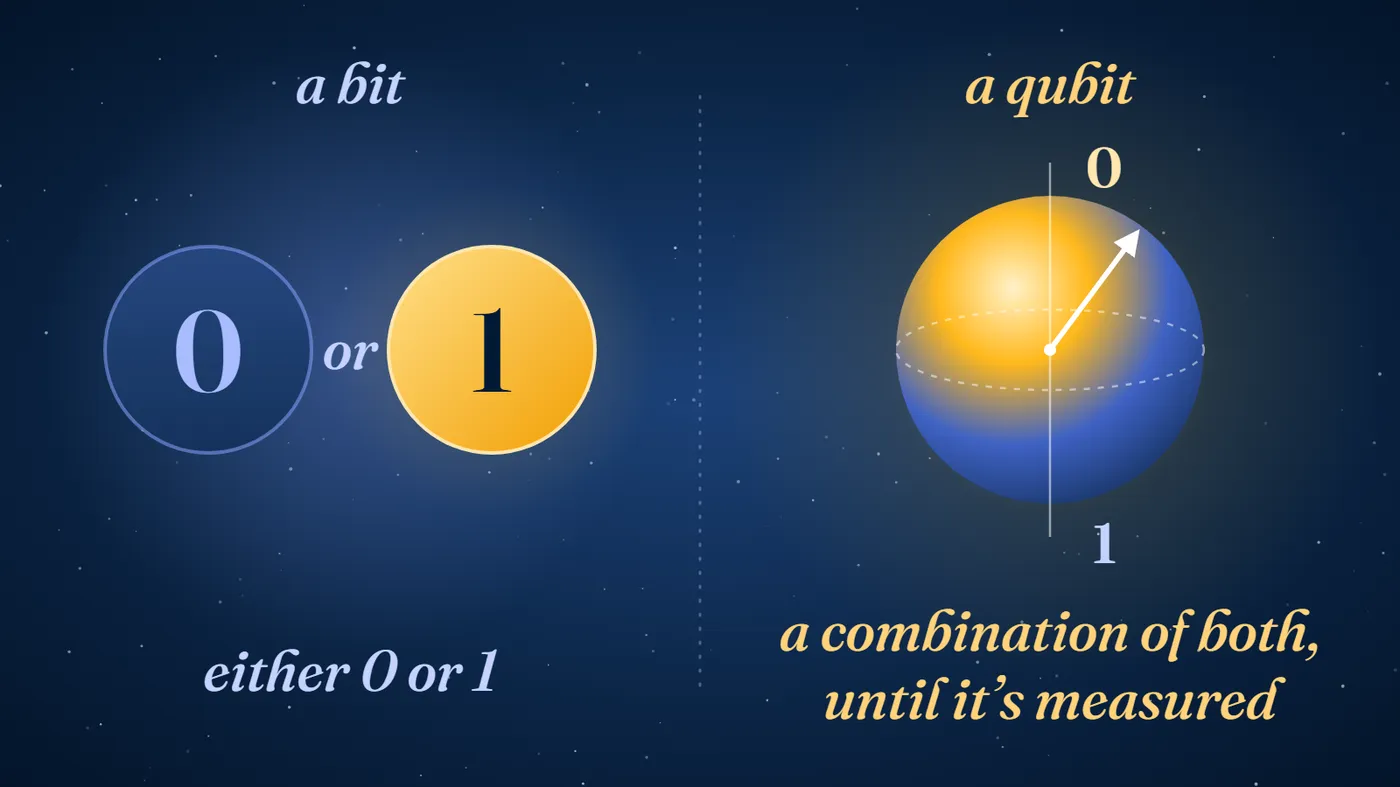
Qubits exploit two extraordinary properties of quantum mechanics:
Superposition
A quantum system can exist in a combination of possible states until measured. This gives quantum algorithms a different way to represent and manipulate information.
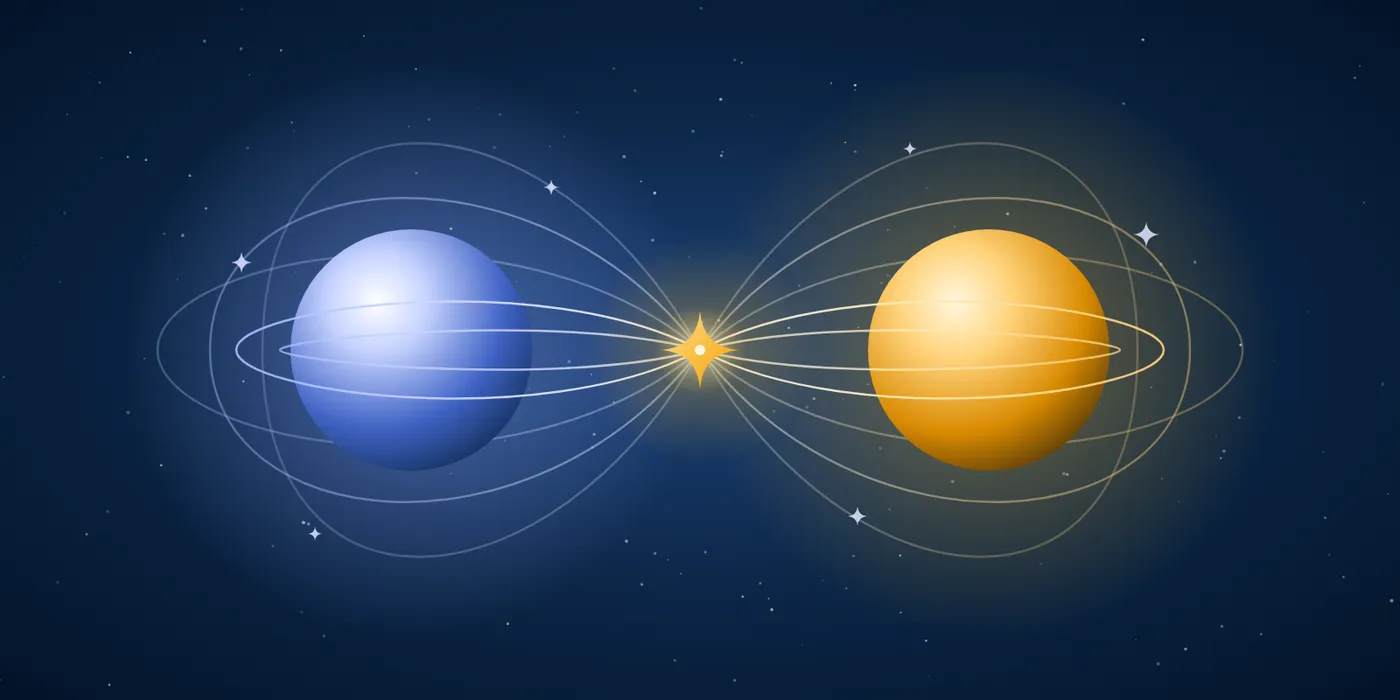
Entanglement
Two or more quantum systems can share correlations that cannot be explained by treating them as independent classical systems.
These properties allow quantum algorithms to approach certain computational problems in fundamentally different ways.
However, there’s an important distinction: a quantum computer isn’t simply a classical computer that can calculate everything faster. It offers potential advantages for particular classes of problems, not universal superiority.
And here’s where things get particularly interesting.
Quantum computing has potential applications in:
Drug discovery and pharmaceutical research
Simulating molecular interactions and chemical systems.
Materials science
Investigating new materials, superconductors and chemical compounds.
Cryptography and cybersecurity
Understanding the implications of quantum algorithms for existing encryption systems and developing quantum-resistant alternatives.
Financial modelling
Exploring specialised optimisation and simulation problems.
Artificial intelligence
Investigating quantum machine learning and hybrid quantum-classical approaches.
Scientific research
Simulating physical systems that are difficult to model using conventional computers.
Notice the wording: potential applications. Many of these remain active research areas rather than commercially established quantum computing solutions.
2. The fascinating connection between quantum physics and your smartphone
Here’s a little scientific perspective that deserves a place in this conversation.
Quantum computing might sound like a completely new technological revolution. But the truth is that the quantum world has already shaped the technology we use every day.
Your smartphone’s processor, memory chips, transistors, LEDs, and semiconductor devices would not exist in their modern form without our understanding of quantum mechanics.
The development of semiconductor physics relies on understanding how electrons behave inside materials, including energy bands, quantum states and tunnelling phenomena.
And we cannot discuss the foundations of modern quantum technology without mentioning Richard Feynman.
Feynman, who received the 1965 Nobel Prize in Physics alongside Julian Schwinger and Sin-Itiro Tomonaga for their fundamental work in quantum electrodynamics (QED), made extraordinary contributions to our understanding of how light and matter interact.
He also famously proposed the idea of using quantum mechanical systems to simulate other quantum systems, helping inspire the modern quantum computing movement.
His 1982 vision was particularly consequential: nature behaves quantum mechanically, so why not build computers that exploit quantum mechanics to simulate nature?
There’s one distinction worth getting right: Feynman did not single-handedly discover QED, and semiconductor microprocessors are not the product of QED alone. They emerged from decades of collective work in quantum mechanics, solid-state physics, semiconductor engineering and electronics.
But the larger point is fascinating:
Quantum physics didn’t suddenly arrive with quantum computers. It has been quietly powering the technological world around us for decades.
And quantum computing represents another attempt to harness those same fundamental laws for a new generation of technology.
3. The Yays: Why quantum computing could be an extraordinary career choice
Yay #1: You’re entering a field that is still being built
Most students enter established industries where the broad technological architecture is already understood.
Quantum computing is different.
Researchers are still working on how to build scalable processors, reduce computational errors, improve qubit stability and develop practical applications.
That creates opportunities for students who want to contribute to foundational research rather than simply operate existing technologies.
You could find yourself working on:
- Quantum hardware and processor architecture.
- Quantum algorithms and computational complexity.
- Quantum error correction.
- Quantum communication and networking.
- Quantum materials and nanotechnology.
- Quantum software and programming frameworks.
The opportunity is not merely to participate in an industry. It is to help shape one.
Yay #2: Governments are treating quantum technology as a strategic priority
Quantum technology is no longer confined to university laboratories.
The United States, United Kingdom, Australia, Singapore, China, Germany and India have all recognised its strategic significance.
India’s National Quantum Mission, approved in April 2023, has an allocated outlay of ₹6,003.65 crore for 2023–24 to 2030–31.
Four thematic hubs have been established:
| Research domain | Lead institution |
|---|---|
| Quantum Computing | IISc Bengaluru |
| Quantum Communication | IIT Madras and C-DOT |
| Quantum Sensing | IIT Bombay |
| Quantum Materials and Devices | IIT Delhi |
These hubs are intended to bring together research institutions, government agencies, industry and startups.
For Indian students, this is particularly significant. You don’t necessarily have to leave India to participate in meaningful quantum research.
Yay #3: The career possibilities extend beyond Physics
Here’s something many students get wrong.
Quantum computing is not exclusively for people who want to become theoretical physicists.
The industry needs people from several academic backgrounds:
- Physics graduates who understand quantum mechanics and experimental systems.
- Computer science graduates who can develop quantum algorithms and software.
- Electrical engineers who can work on control electronics and quantum hardware.
- Mathematics graduates who understand linear algebra, probability and computational theory.
- Materials scientists and chemists who can investigate quantum materials and molecular systems.
In fact, one of the most interesting developments in the field is the emergence of the quantum engineer: someone who can translate theoretical quantum principles into functioning technological systems.
Yay #4: You can work across several industries
Your career doesn’t necessarily have to begin and end in a quantum computing laboratory.
Potential employers and research ecosystems include:
- IBM and its quantum computing research ecosystem.
- Google Quantum AI.
- Microsoft and its quantum development initiatives.
- Amazon Web Services and Amazon Braket.
- IonQ.
- National research laboratories and government funded research centres.
- Semiconductor, photonics, telecommunications, and advanced materials companies.
- Quantum technology startups.
There are also opportunities in technology consulting, intellectual property, scientific computing, and quantum cybersecurity.
The key is to develop transferable technical skills rather than assume that every quantum graduate will immediately land a job at a quantum computing company.
Yay #5: You can access a genuinely interdisciplinary education
Quantum computing sits at the intersection of several disciplines.
A well designed programme can expose you to physics, mathematics, electronics, computer science, engineering and even entrepreneurship.
This is particularly valuable if you enjoy solving problems that do not fit neatly into one academic subject.
4. The Nays: What universities and counsellors won’t always tell you
Let’s be honest. There are some substantial obstacles in this field.
Nay #1: Quantum infrastructure is extraordinarily expensive
This is probably the most significant engineering challenge.
Many quantum computing systems require highly specialised infrastructure, including:
- Dilution refrigerators capable of reaching temperatures close to absolute zero.
- Ultra-high vacuum systems.
- Precision laser systems.
- Microwave control electronics.
- Advanced nanofabrication facilities.
- Sophisticated measurement and error-correction systems.
Building and maintaining these systems requires enormous capital investment, specialised facilities and highly trained personnel.
This has an important implication for students: you should not choose a university merely because it has a quantum computing course.
Look for universities with active laboratories, research groups, industry partnerships and access to actual quantum hardware.
A university with an impressive programme brochure but limited research infrastructure may not provide the experience you need.
Nay #2: Quantum computers are still noisy and error prone
Today’s quantum processors are not perfect computational machines.
Qubits are extremely sensitive to environmental disturbances. Their quantum states can deteriorate through a phenomenon known as decoherence.
Even minor disturbances can introduce errors into calculations.
Researchers are therefore working on quantum error correction, fault-tolerant architectures and ways to make quantum processors more reliable.
The challenge is substantial: a useful logical qubit may require many physical qubits to protect it against errors.
This is one reason why building a commercially useful, large-scale quantum computer remains difficult.
Nay #3: Not every problem needs a quantum computer
This is where the marketing surrounding quantum computing can become misleading.
Your laptop isn’t going to become obsolete because a quantum computer exists.
Classical computers remain excellent at everyday computing tasks, databases, spreadsheets, web applications, conventional AI workloads and countless other applications.
Quantum computers are expected to offer advantages for specific problems, particularly in quantum simulation and certain mathematical and optimisation tasks.
They are not universal replacements for classical processors.
In fact, the foreseeable future is likely to involve hybrid quantum-classical computing, where both types of systems work together.
Nay #4: The career market is still evolving
A growing research ecosystem does not automatically translate into millions of immediate job openings.
Many specialised positions require master’s degrees or PhDs, and some research roles require substantial experience in a specific experimental or theoretical domain.
A student pursuing a bachelor’s degree should therefore avoid assuming that a quantum engineering qualification guarantees a high-paying job immediately after graduation.
Your employability will depend on your broader technical foundation, practical experience, research exposure and ability to work across related disciplines.
Nay #5: The academic learning curve is steep
If you dislike mathematics, quantum computing might become an uncomfortable academic experience.
Linear algebra, probability, complex numbers, calculus, differential equations and quantum mechanics form much of its intellectual foundation.
You cannot simply learn a quantum programming framework and expect to become a quantum scientist.
The software is only one part of the picture. Understanding the underlying mathematics and physics is what separates a competent practitioner from someone who can genuinely contribute to the field.
5. Which academic route should you choose: Bachelor’s, Master’s or PhD?
This is arguably the most important section of this article.
The right programme depends on where you are in your academic journey and what you ultimately want to do.
Let’s look at three possible entry points.
- Route A You’re in Class 11 or 12 and want to pursue a bachelor’s degree
- Route B You’ve completed your bachelor’s and want to specialise through an MS
- Route C You want to pursue a PhD and become a quantum researcher
Route A: You’re in Class 11 or 12 and want to pursue a bachelor’s degree
If you’re still in school, don’t panic if you cannot find dozens of universities offering a degree titled Bachelor’s in Quantum Computing.
Dedicated undergraduate degrees in this area are still relatively uncommon.
In fact, pursuing a strong undergraduate degree in Physics, Computer Science, Electrical Engineering or Mathematics can be an excellent starting point.
Recommended undergraduate pathways:
| Your interest | Recommended bachelor’s degree |
|---|---|
| Quantum hardware | Physics / Electrical Engineering |
| Quantum software | Computer Science |
| Quantum algorithms | Computer Science / Mathematics |
| Quantum materials | Physics / Materials Science |
| Quantum engineering | Electrical / Quantum Engineering |
One particularly interesting option is the University of New South Wales (UNSW), Australia.
-
Australia
University of New South Wales
Bachelor of Engineering (Honours) in Quantum Engineering
Four years · Undergraduate · Engineering
UNSW offers a dedicated undergraduate Quantum Engineering degree, combining physics, microelectronics, microwave systems and telecommunications.
This is particularly attractive for students who already know they want to work on quantum hardware and engineering.
But don’t overlook another excellent possibility: NUS
-
Singapore
National University of Singapore
BSc (Hons) Physics with Specialisation in Quantum Technologies
Undergraduate specialisation
Students can pursue quantum technology coursework within the Physics major, including quantum mechanics, device physics and quantum optics.
Route B: You’ve completed your bachelor’s and want to specialise through an MS
This is arguably one of the most attractive entry points into the quantum technology ecosystem.
You already possess an academic foundation in a related discipline. A specialised master’s degree can help you transition into quantum computing, quantum engineering or quantum information science.
Here are some particularly interesting programmes across the world.
North America
-
1USA
University of Chicago
Master of Engineering — Quantum Engineering Track
Engineering · Graduate
An applied route covering quantum mechanics, quantum information, quantum computation, quantum security, quantum optics and nanofabrication.
-
2Canada
University of Waterloo
MSc in Physics – Quantum Technology Specialisation
One-year course-based option; research-based alternatives available
Waterloo’s Institute for Quantum Computing offers interdisciplinary pathways through physics, mathematics, computer science, chemistry and engineering.
-
3USA
University of California Los Angeles
Master of Quantum Science and Technology (MQST)
One-year full-time programme
A specialised programme combining theoretical coursework with laboratory experience, research training and industry exposure.
Europe
-
4Switzerland
ETH Zurich
MSc in Quantum Engineering
Two years · 120 ECTS · English-taught
One of the most compelling programmes for students interested in the intersection of quantum physics and engineering. Includes coursework, projects, research and industry exposure.
-
5Germany
Technical University of Munich and LMU Munich
MSc in Quantum Science & Technology
Two years · 120 ECTS · English-taught
Students can specialise in theoretical quantum science, experimental quantum science or quantum computing. The programme benefits from the Munich Quantum Valley research ecosystem.
-
6United Kingdom
University of Oxford
MSc in Quantum Technologies
One year · Full-time
Covers quantum computing, sensing and communications, with practical training and an extended four-month research project.
-
7Netherlands
Delft University of Technology and Leiden University
MSc in Quantum Information Science & Technology
Two years · 120 ECTS · Joint degree
A multidisciplinary programme spanning physics, mathematics, electrical engineering and computer science. Students can specialise in quantum computing and simulation, quantum communication or quantum sensing.
Asia-Pacific
-
8Singapore
National University of Singapore
Quantum research master’s pathways and National Quantum Scholarships Scheme
NUS offers a route into quantum research through its relevant graduate programmes, with dedicated scholarship support for eligible master’s research students.
Route C: You want to pursue a PhD and become a quantum researcher
If you’re passionate about research, quantum computing offers some exceptionally interesting doctoral opportunities.
This is the route for students who want to investigate unanswered scientific questions, develop new algorithms, design quantum architectures or push the boundaries of quantum technology.
Here are the programmes I’d put on a serious PhD applicant’s radar.
Doctoral pathway
-
1USA
Harvard University
PhD in Quantum Science and Engineering
One of the most interesting interdisciplinary doctoral programmes, bringing together physics, chemistry, engineering and computer science. Students can pursue research in quantum sensing, simulation and computation.
-
2USA
University of Chicago
PhD in Quantum Science and Engineering
An excellent option for students interested in experimental and theoretical research, quantum computing, communications and quantum materials. Its research ecosystem includes the Chicago Quantum Exchange and national research centres.
-
3United Kingdom
University of Oxford and partner universities
EPSRC Centre for Doctoral Training in Quantum Informatics
Four-year doctoral programme · Fully funded programme
An interdisciplinary doctoral training programme connecting computer science, mathematics, physics and engineering, with academic, industry and government partnerships.
-
4Canada
University of Waterloo
PhD in Quantum Information
Students can pursue doctoral research through multiple academic departments, including physics, computer science, mathematics, chemistry and electrical engineering.
-
5USA
Massachusetts Institute of Technology
PhD pathways through Physics, EECS, and related disciplines
MIT has a formidable quantum information science research ecosystem. Students can explore quantum algorithms, information theory, quantum engineering and experimental hardware research.
A PhD applicant should investigate faculty supervisors and research fit before becoming attached to a university’s name.
6. What about studying quantum computing in India?
Here’s where I think students from India should pay particular attention.
India is developing its quantum technology ecosystem, and the National Quantum Mission has already created a foundation for specialised research and collaboration.
The Indian Institute of Science (IISc), Bengaluru, is leading the Quantum Computing Thematic Hub.
Other important institutions participating in India’s quantum research ecosystem include:
- IIT Madras — Quantum communication.
- IIT Bombay — Quantum sensing and metrology.
- IIT Delhi — Quantum materials and devices.
- IIT Kanpur — Quantum research and development.
- Tata Institute of Fundamental Research — Fundamental and experimental research.
- IISER Pune and other IISERs — Research in fundamental sciences.
- NISER Bhubaneswar — Research opportunities in fundamental physics.
Explore India’s National Quantum Mission
For Indian applicants, an undergraduate degree in Physics, Mathematics, Computer Science or Electrical Engineering followed by specialised research or postgraduate study can be an excellent route.
And don’t overlook the possibility of joining a research project during your undergraduate years. Early exposure to laboratory work can be a major advantage when applying for international graduate programmes.
7. What should you study before applying?
Let’s get practical.
A quantum computing applicant needs more than enthusiasm for futuristic technology.
Here is the academic preparation I’d recommend.
| Subject | Why it matters |
|---|---|
| Linear Algebra | Vectors, matrices and quantum state representations |
| Calculus | Mathematical foundations of physical systems |
| Probability and statistics | Quantum measurement and uncertainty |
| Complex Numbers | Quantum state calculations |
| Classical Mechanics | Understanding physical systems |
| Electromagnetism | Foundations of quantum hardware and electronics |
| Quantum Mechanics | The fundamental language of the discipline |
| Programming | Simulations, algorithms and quantum software |
Programming languages and tools worth exploring:
Python
An excellent starting point.
Qiskit
IBM’s quantum computing software development framework.
Cirq
Google’s quantum computing framework.
PennyLane
Quantum machine learning and hybrid quantum-classical workflows.
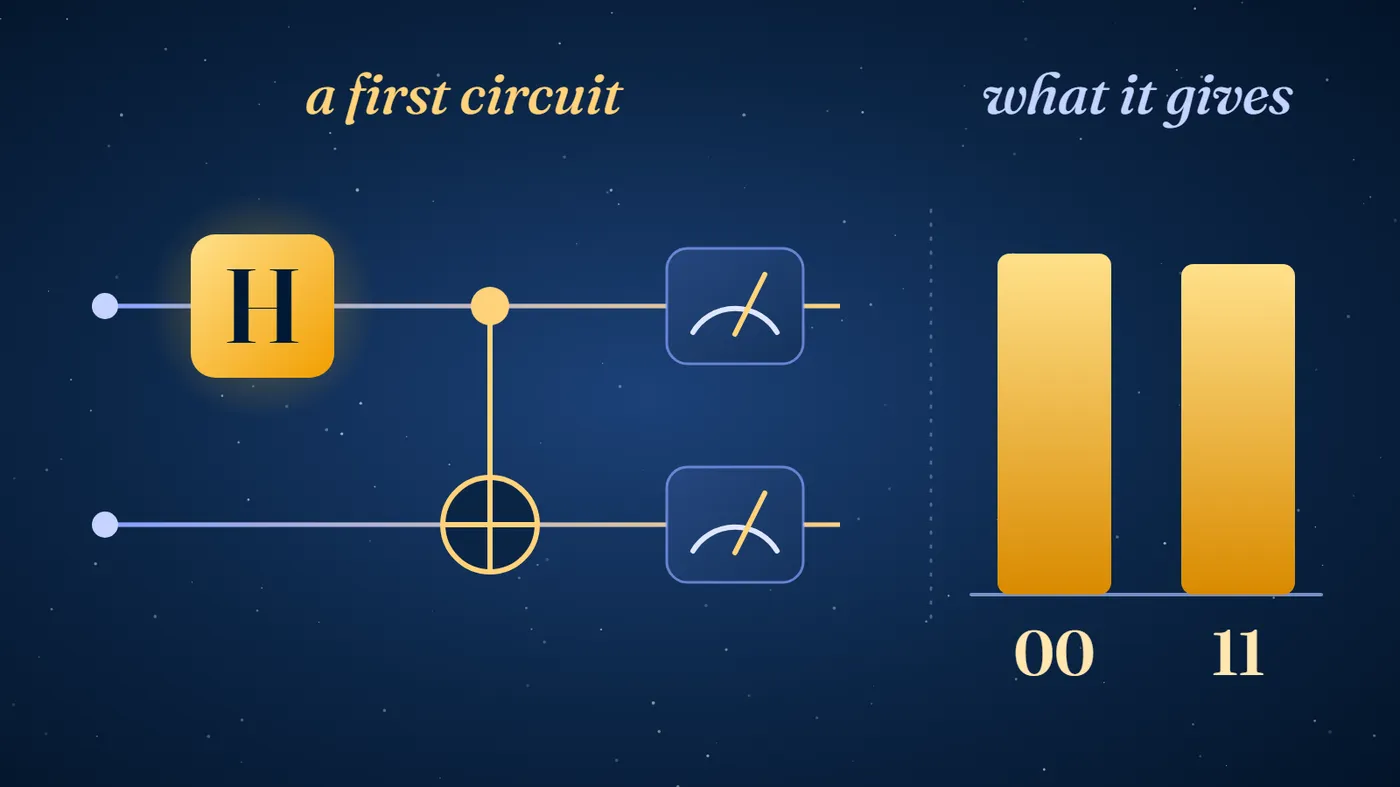
A student can begin experimenting with quantum circuits using software simulators and cloud accessible quantum processors without purchasing expensive laboratory equipment.
That’s an important distinction: learning quantum computing software does not require owning a quantum computer.
8. How do you choose the right university? Don’t fall for the rankings trap!
Here’s a mistake I see prospective students make across almost every specialised discipline.
They start with university rankings and work backwards.
For quantum computing, this can be particularly misleading.
A university may have an extraordinary physics department but no dedicated quantum engineering degree. Another might have a relatively modest overall ranking but offer exceptional access to specialised laboratories and researchers.
Instead, evaluate universities against five parameters:
0 of 5
The Quantum Powerhouses: Universities Where the Future of Quantum Technology is Being Built

Some universities don’t just teach quantum computing; they are actively inspiring its future. If you’re aspiring to work at the frontier of quantum science, these institutions deserve a place on your radar.
-
USA
Princeton University
A major force in quantum science and engineering, with research spanning quantum materials, superconducting qubits, quantum information theory and hardware development. Its Princeton Quantum Initiative and dedicated PhD programme make it particularly compelling for research-oriented aspirants.
-
USA
MIT
A powerhouse in quantum engineering, quantum information science and the development of technologies that could translate quantum research into practical applications.
-
USA
Harvard University
Particularly strong in quantum science, atomic and molecular physics, quantum optics and quantum information research.
-
USA
Caltech
Renowned for fundamental research in quantum information and physics, with a strong emphasis on pushing the boundaries of what quantum systems can do.
-
USA
University of Chicago
An important hub connecting quantum science, engineering and computing, supported by a broader ecosystem of research institutes and national initiatives.
-
Switzerland
ETH Zurich
Particularly attractive for students seeking a structured academic pathway, with its dedicated MSc in Quantum Engineering combining physics, electrical engineering, laboratory work and research.
My university selection matrix
| Your career ambition | Universities worth prioritising |
|---|---|
| Quantum hardware engineering | UNSW, ETH Zurich, UChicago, TU Delft |
| Quantum algorithms and software | MIT, Oxford, Waterloo, UChicago |
| Experimental quantum physics | Harvard, Caltech, ETH Zurich, Waterloo |
| Quantum materials | Stanford, Berkeley, UChicago, TUM |
| Quantum entrepreneurship | Harvard/MIT ecosystem, Chicago Quantum Exchange, ETH Zurich |
These are strategic shortlists, not an official ranking. The right choice ultimately depends on the specific research group, supervisor, and degree structure.
9. What kind of career can you expect after graduating?
Let’s move beyond the university brochures and look at potential career trajectories.
| Career profile | What you’ll work on | Typical academic preparation |
|---|---|---|
| Quantum Software Engineer | Quantum programming and algorithms | CS / Mathematics / MS |
| Quantum Research Scientist | Fundamental quantum research | MS / PhD |
| Quantum Hardware Engineer | Qubit design and control systems | Physics / EE / MS |
| Quantum Algorithm Developer | Designing computational algorithms | Mathematics / CS / PhD |
| Quantum Materials Scientist | Advanced materials and device research | Physics / Materials Science / PhD |
| Quantum Cryptography Specialist | Quantum communication and security | Mathematics / Physics / CS |
| Quantum Technology Consultant | Commercial applications and strategy | Engineering / CS / MBA or relevant experience |
Companies and research institutions are looking for people who can translate theoretical breakthroughs into functioning systems.
But let’s be realistic about compensation.
The quantum sector has attracted considerable investment, and specialist positions can be well compensated. However, there isn’t a dependable universal salary benchmark for quantum graduates. Compensation varies considerably by geography, employer, academic qualifications and research specialisation.
Do not select a degree based exclusively on salary projections published in promotional reports.
Instead, evaluate the long-term value of the skills you’re acquiring.
10. Our verdict: Should you pursue quantum computing?
Let’s bring everything together.
The Yays
- A rapidly developing scientific and engineering discipline.
- Strong government investment and international research collaboration.
- Interdisciplinary career opportunities across physics, engineering, mathematics and computer science.
- Potential applications in pharmaceuticals, materials science, cybersecurity and scientific computing.
- Opportunities to participate in foundational research and technological innovation.
The Nays
- Expensive infrastructure and significant hardware development challenges.
- Qubit instability, noise and error-correction limitations.
- Limited demonstrated commercial advantage across everyday computing applications.
- A relatively specialised and evolving employment market.
- Demanding mathematical and scientific prerequisites.
So, who should pursue quantum computing?
Go for it if:
- You genuinely enjoy physics, mathematics, and computational problem-solving.
- You are comfortable working on problems that may not have immediate solutions.
- You want to participate in scientific research or advanced engineering.
- You’re willing to pursue specialised postgraduate education if your chosen career requires it.
Think twice if:
- You’re choosing the discipline simply because it sounds futuristic.
- You expect quantum computers to replace conventional computers in the next couple of years.
- You dislike mathematics and theoretical science.
- Your primary objective is to acquire a quick professional qualification and enter the job market immediately.
There is absolutely nothing wrong with choosing conventional computer science, electrical engineering, or data science instead. Those disciplines offer extensive career opportunities in their own right.
Quantum computing should be a conscious academic choice, not a fashionable alternative.
11. The Blue Bear perspective: Don’t chase the revolution. Prepare to build it.
Here’s something we want every prospective quantum computing student to understand.
When the internet first emerged, many people struggled to comprehend its eventual significance. When smartphones entered the mainstream, nobody could have predicted the extent to which they would transform everyday life.
Quantum computing could represent another foundational technological shift.
But the people who will shape its future won’t necessarily be those who were the earliest to enroll in a degree with the word quantum in its title.
They will be those who develop an extraordinary command of the fundamentals.
The physicist who understands how to manipulate quantum states. The engineer who can build a stable qubit architecture. The computer scientist who can design efficient quantum algorithms. The mathematician who can solve the error correction challenges that currently stand in the way of scalable systems.
These are the people the quantum ecosystem needs.
And that is precisely why choosing your university, academic pathway and research specialisation matters so much.
The next generation of computing is not waiting for spectators. It’s waiting for builders.
Blue Bear Global. Big dreams. Bigger world.
Helping ambitious students make informed decisions about their global education and careers.
Further reading and official university resources
If you’re serious about exploring quantum computing, these are useful starting points:
- India’s National Quantum Mission
- MIT Quantum Initiative
- Chicago Quantum Institute
- ETH Zurich Quantum Center
- Munich Quantum Valley
- Oxford Quantum Informatics CDT
- Waterloo Institute for Quantum Computing
- IBM Quantum Learning
- National Academies – Quantum Computing: Progress and Prospects
Frequently asked questions
Is quantum computing a good career choice?
It can be, if you enjoy physics, maths and hard problems that may not have quick answers. The field is growing and governments are investing in it, but the job market is still evolving and many specialist roles ask for a master’s or a PhD. A quantum degree doesn’t guarantee a high-paying job straight after you graduate.
Can I study quantum computing after Class 12?
Yes, but degrees with quantum in the title are still uncommon at bachelor’s level. UNSW in Australia offers a Bachelor of Engineering (Honours) in Quantum Engineering, and NUS in Singapore offers a Physics degree with a specialisation in Quantum Technologies. For most students, a strong degree in Physics, Computer Science, Electrical Engineering or Mathematics is an excellent start, and you can specialise at master’s level.
Do I need a physics degree to work in quantum computing?
No. The field also needs computer scientists, electrical engineers, mathematicians, materials scientists and chemists. What you can’t skip is the maths: linear algebra, probability, complex numbers and calculus, along with the basics of quantum mechanics.
Can I learn quantum computing without a quantum computer?
Yes. Start with Python, then try a framework such as Qiskit, Cirq or PennyLane. Software simulators and cloud accessible quantum processors let you run circuits without any laboratory equipment. Software alone won’t make you a quantum professional, so keep building your maths and physics as well.
Can I study quantum computing in India?
Yes, though you’ll usually get there through a related degree. India’s National Quantum Mission has four thematic hubs, led by IISc Bengaluru, IIT Madras with C-DOT, IIT Bombay and IIT Delhi. These are research hubs rather than a list of quantum degrees, so check each department’s actual degrees, faculty and admission requirements.
How do I choose the right university for quantum computing?
Start with what you want to do, not with the rankings. Check five things: faculty working in your area, access to laboratories, links with industry, research chances for students, and the full cost including living expenses. If you’d like help building your shortlist, talk to us.